More Ginger info
Ginger’s peppery bite adds more than just spice—it packs the punch in this plant’s power.
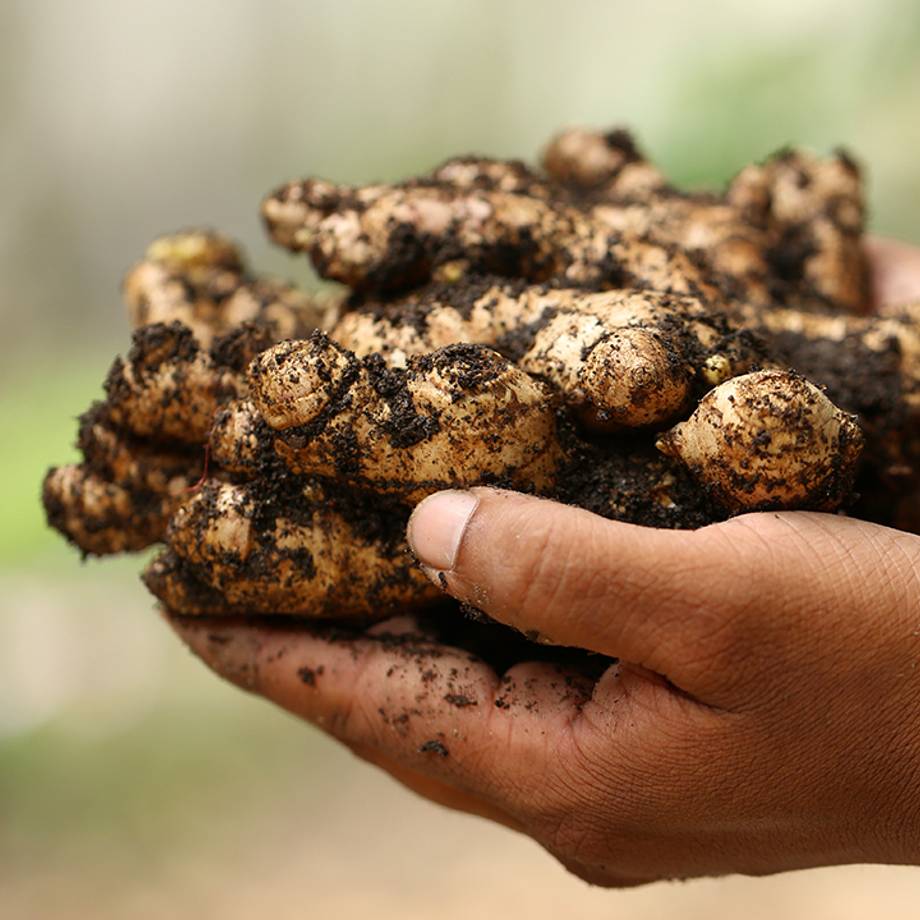
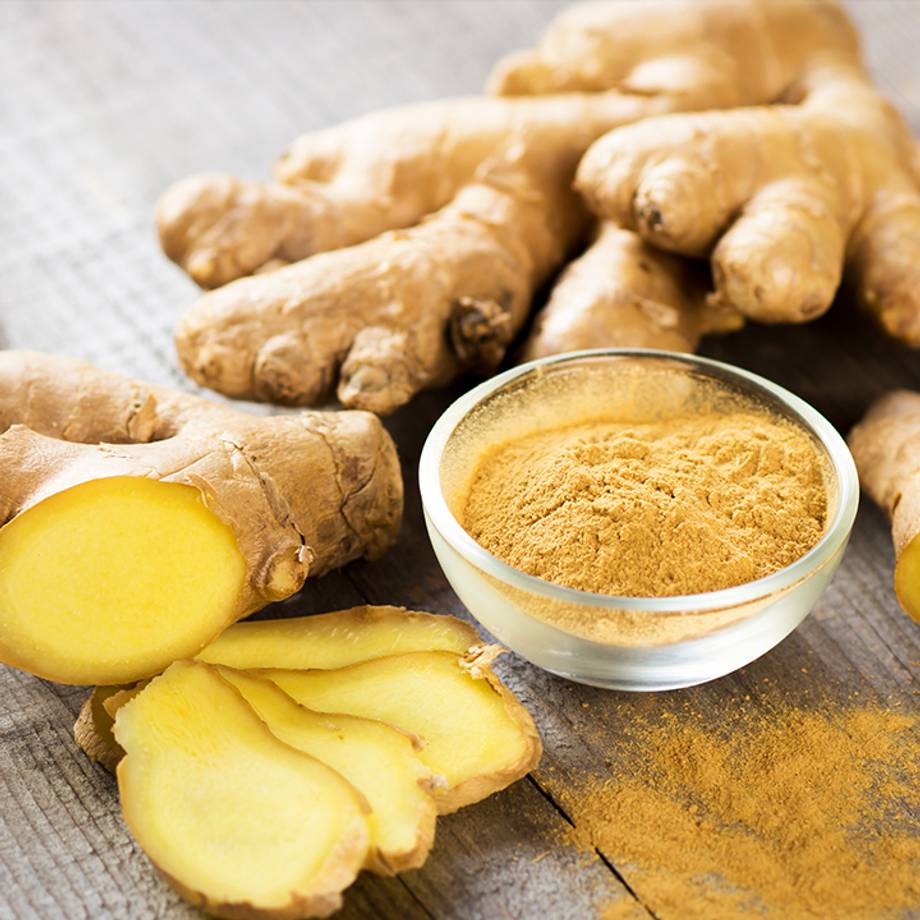
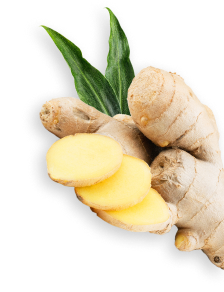
What are the Benefits of Ginger? This warming root (well, really a rhizome) is commonly used in tropical cuisines for its bold, spicy flavor. When used at the right dose internally, such as in an infusion or tincture, ginger helps ease occasional indigestion, cramping and helps settle a belly due to mild general nausea and nausea associated with motion.*
Ginger was even traditionally used externally as a poultice or salve for a variety of uses. In modern Western herbalism, it’s more technically known as a carminative, while there is evidence of it also being used traditionally as a diaphoretic (to promote a feeling of warmth and support natural perspiration), digestive stimulant, and aid in mild menstrual cramping.
Historically, ginger is featured in many international cuisines. In Indian cuisine, it’s infused into spicy masala chai. In Japan, it’s known as pickled gari, the spicy, pink shavings served with sushi. And, in Jamaica, you’ll see it served as a refreshing non-alcoholic beer. Sipping on a simple cup of ginger tea daily is a great way to ensure you’re getting all the benefits from this powerhouse plant.
Ginger has played an essential role in Indian, Middle Eastern, and Asian herbal medicine traditions. It’s a popular addition to formulas that need a warming quality. In many traditional medicine theories, it’s a way to promote circulation and flow in a body that’s being challenged with different forms of constriction—whether it be occasional cramping or general digestive issues.*
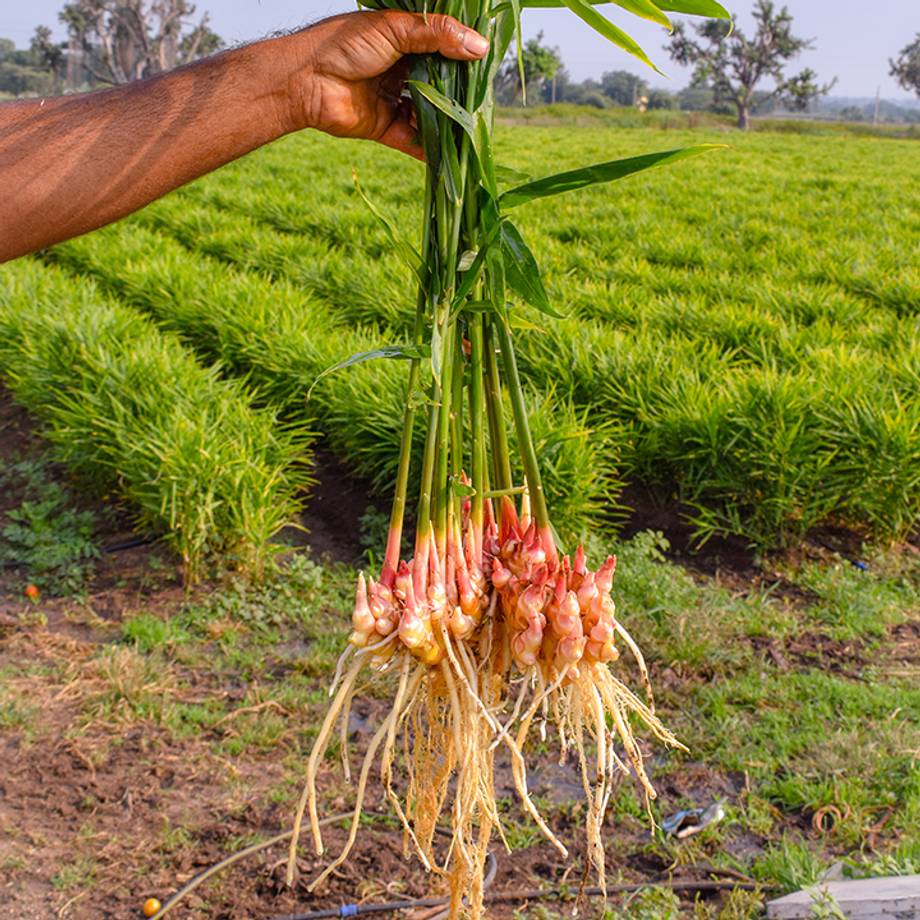
When discussing ginger, herbalists are referring to the species Zingiber officinale. This species of the Zingiberaceae plant family thrives in heat and humidity, making it an ideal plant for subtropical and tropical climates. Under its large green shoots—around four feet tall for mature ginger plants—you’ll find a sprawling network of rhizomes, where most of its active constituents live, including the gingerol and shogaol compounds—which makes it spicy and pungent!
Ginger is native to India and southern China. Rainfall, elevation, temperature, and harvesting time are all key factors that influence ginger’s spice level.
Products that contain Ginger
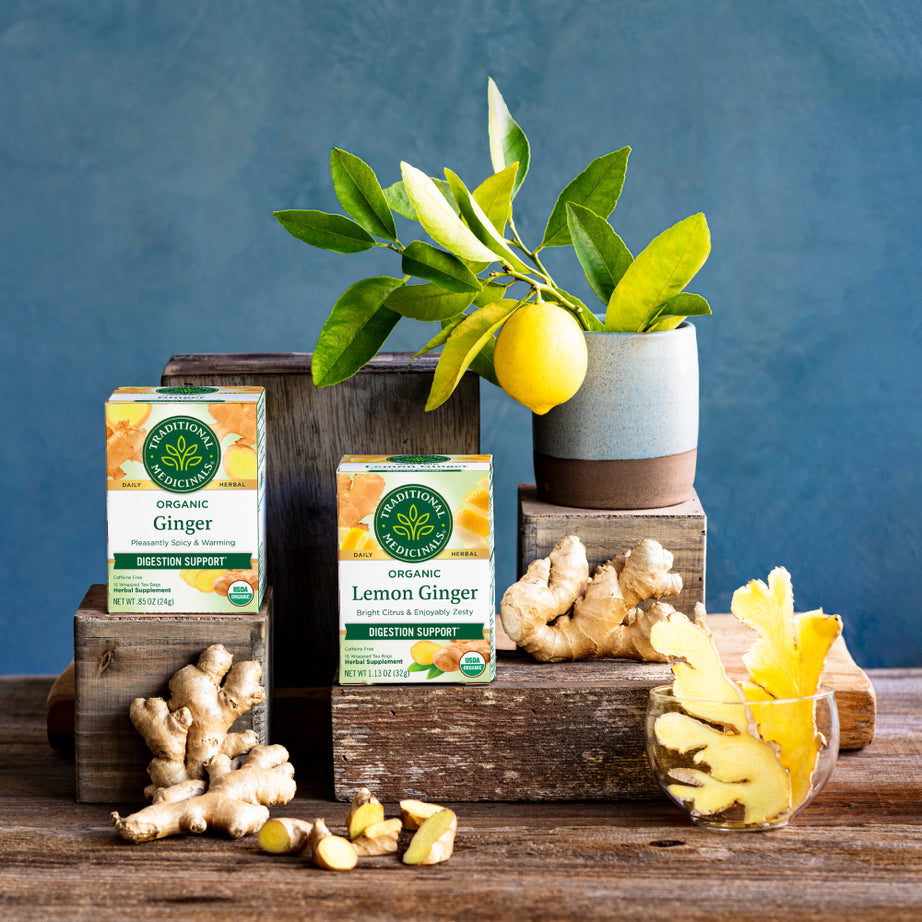
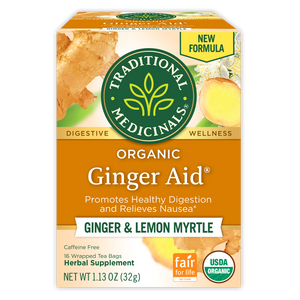
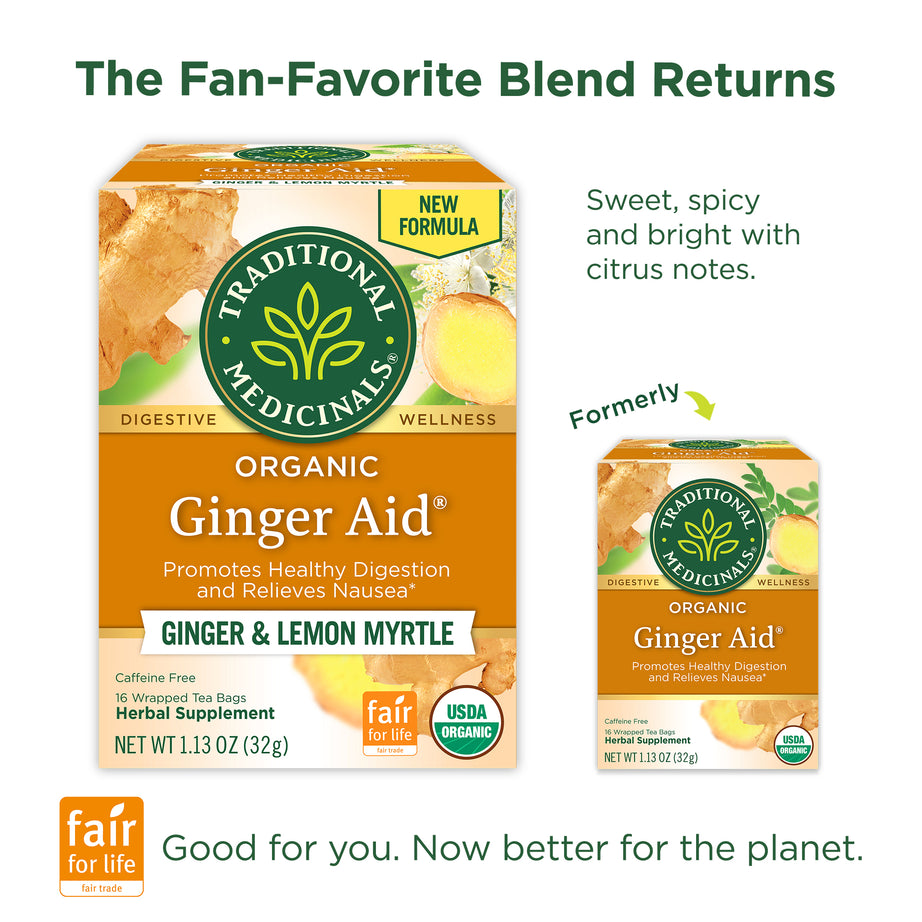
Ginger Aid® Tea
Belly Comfort® Lozenges
Immune Zoom® Lemon Ginger Echinacea Tea
Additional Information
Important Precautions
Consult a healthcare practitioner prior to use if you are pregnant or breastfeeding.
Legal Disclaimer
The information and other content in this article is designed to provide a general overview of the botany, cultural history, and traditional uses of this herb. It is not intended and should not be construed as health advice. Every person is unique and you should consult with your health care provider before using any herbal product or supplement.
Become an Herb Nerd & Get 10% Off!
Herbal tidbits, DIY plant projects, exclusive discounts, and recipes to follow the seasons delivered straight to your inbox.