More Echinacea info
Echinacea, a staple for immune support.
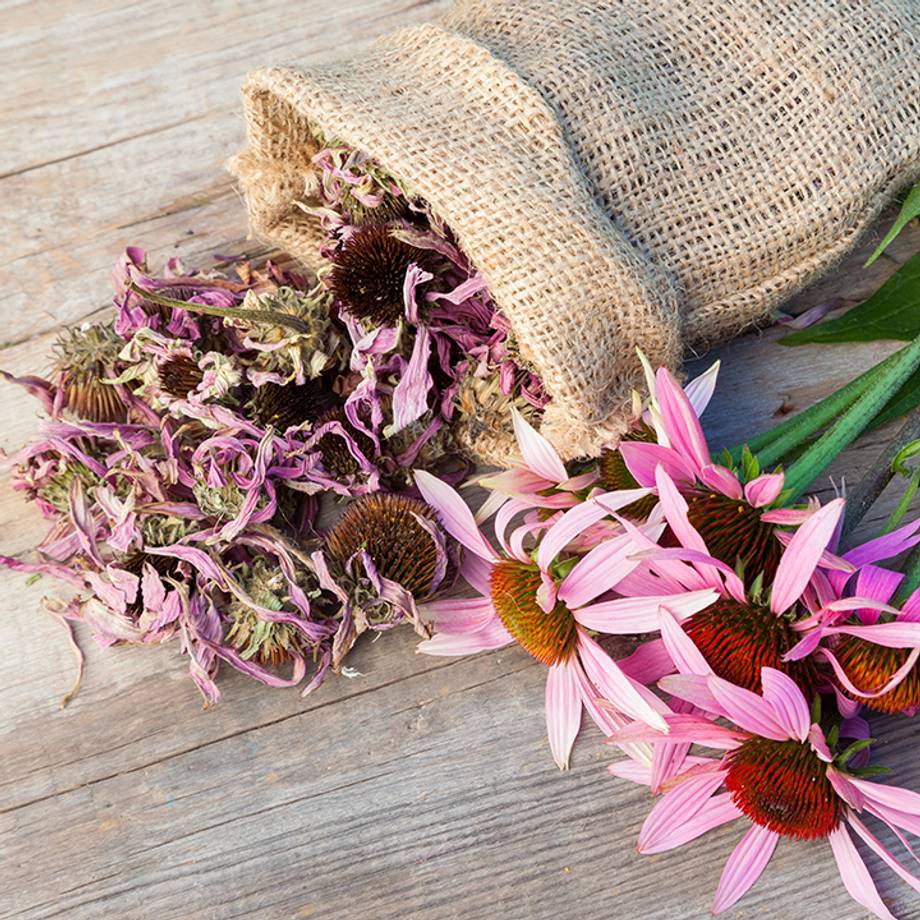
What are the Benefits of Echinacea? When it comes to maintaining seasonal wellness, echinacea is an essential supportive herb from late fall through the winter season. The key to echinacea’s beneficial properties lies deep in its compounds, which, depending on the species, include varying amounts of alkylamides, polysaccharides, and glycoproteins—all of which contribute to the herb’s affinity for the immune system.
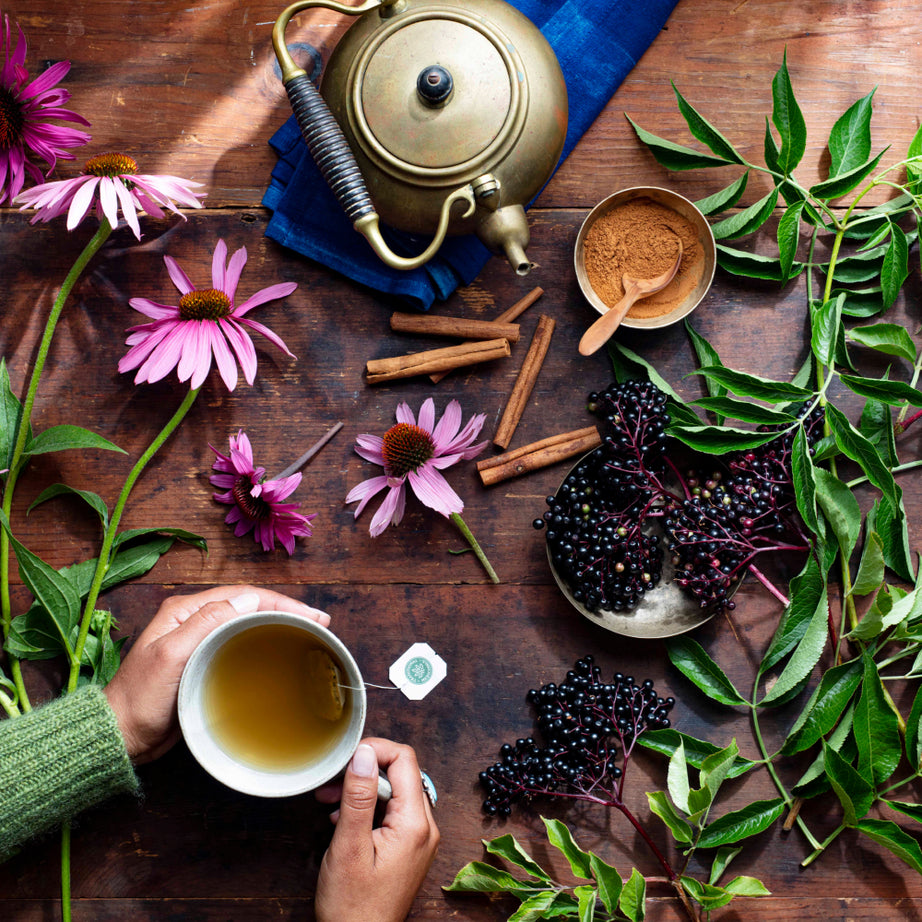
Echinacea’s beneficial compounds are found in all parts of the plant, but are most concentrated in the roots. The tingly alkylamide molecules in echinacea which activate immunity are best preserved in ethanolic extracts. The polysaccharides and glycoproteins fortify the immune system over time and are best extracted with hot water, making hot tea another great way to enjoy the benefits of this herb.*
The entire Echinacea genus is indigenous to North American prairie lands. Many indigenous Native American groups have used it for many generations as an important and sacred herbal ally with many specific uses.
In the mid-1800s the American Eclectic physicians began to use echinacea and its use spread to Europe, where it gained even more popularity. By the beginning of the 20th century, it was one of the most frequently used herbal medicines in the United States, which eventually led to the widespread overharvesting of this wild perennial. Thanks to the conservation and public education efforts of the United Plant Savers, cultivated echinacea is now available for widespread use in many regions of the world.
Echinacea is a coarse, rough-hairy, herbaceous perennial that is native to moist prairies, meadows and open woods of the central to southeastern United States.
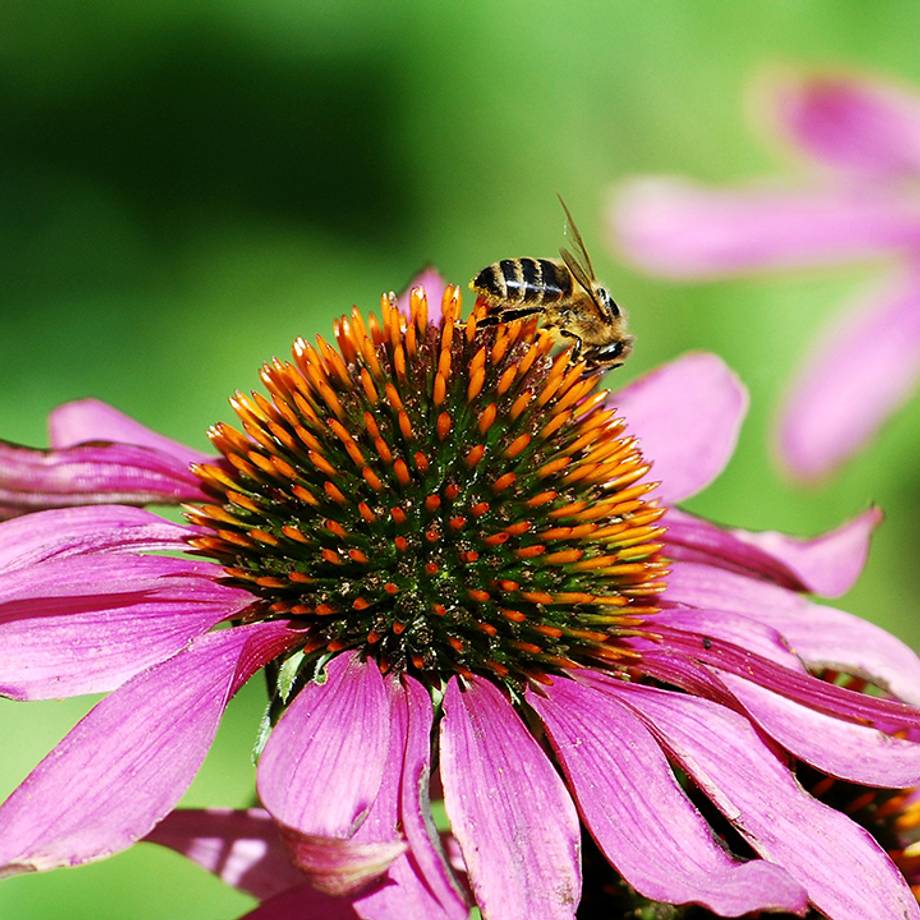
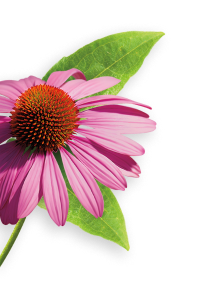
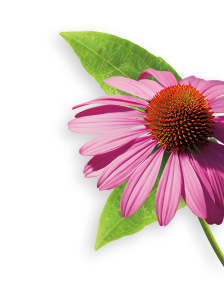
All species of the genus Echinacea are perennials that bloom with both disk and ray flowers known as florets. The purple ray florets attach to a round, high and spiky cone—hence its common name “purple coneflower.” Technically speaking, this cone is composed of hundreds of disc florets, all tightly packed together. This cone is how the plant got its botanical name: echin is derived from the Greek word ekhinos for “hedgehog.“
Products that contain Echinacea
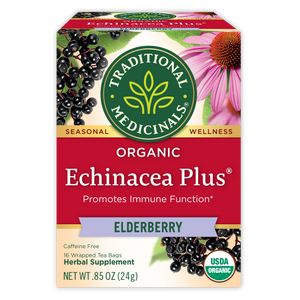
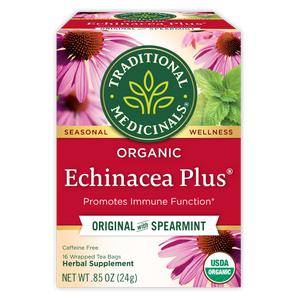
Echinacea Plus® Elderberry Tea
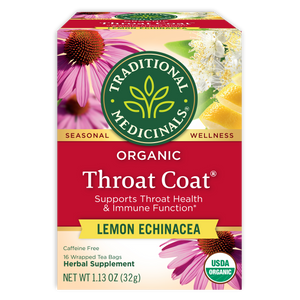
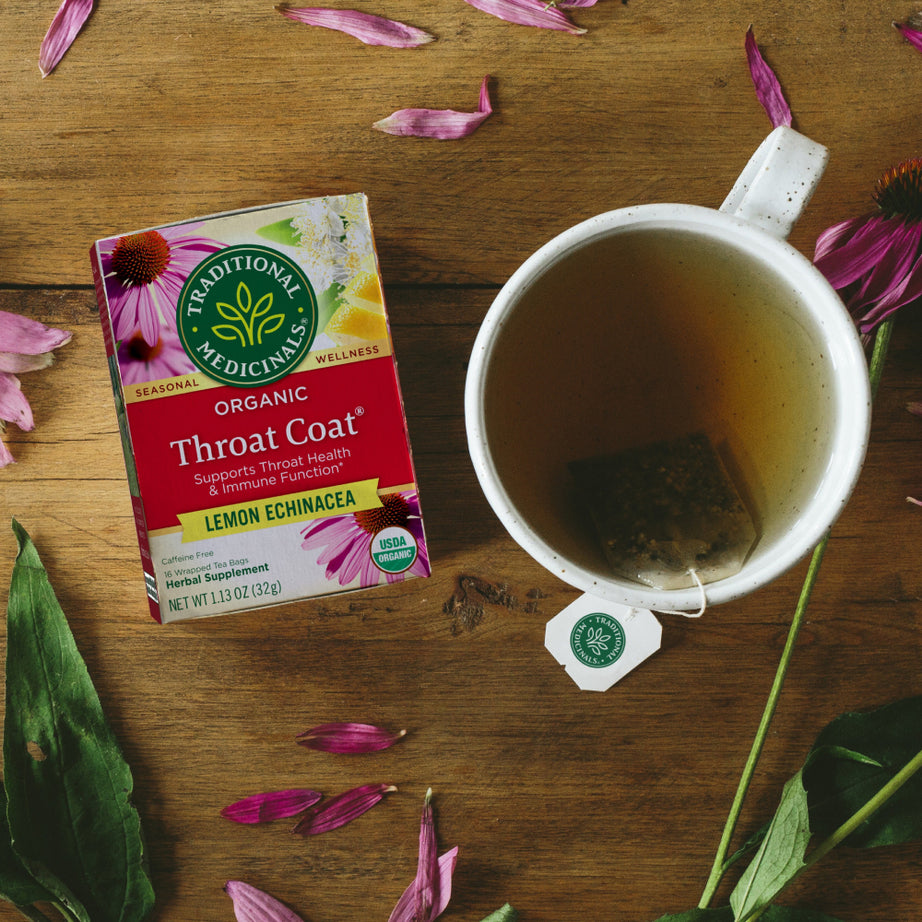
Throat Coat® Lemon Echinacea Tea
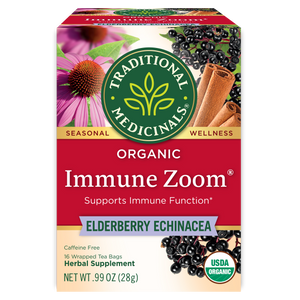
Immune Zoom® Elderberry Echinacea Tea
Immune Zoom® Lemon Ginger Echinacea Tea
Additional Information
Important Precautions
Consult a healthcare practitioner prior to use if you are pregnant or breastfeeding; or if you have an auto-immune or other immune system disorder, or if you are taking immunosuppressants.
Do not consume this herb if you are allergic to plants in the daisy (Asteraceae) family, such as chamomile or echinacea. Not recommended for use with children under 12 years of age.
Legal Disclaimer
The information and other content in this article is designed to provide a general overview of the botany, cultural history, and traditional uses of this herb. It is not intended and should not be construed as health advice. Every person is unique and you should consult with your health care provider before using any herbal product or supplement.
Become an Herb Nerd & Get 10% Off!
Herbal tidbits, DIY plant projects, exclusive discounts, and recipes to follow the seasons delivered straight to your inbox.