More Cleavers info
The Old English word “to cleave to” means “to latch onto.”
What are the Benefits of Cleavers? Cleavers is cherished by herbalists and carefully collected each spring to break up the stagnation of the earlier winter season. Folk herbalists traditionally use the herb for “clearing heat” (a term often used to describe herbs that support the natural movement of fluid and gentle detoxification in the body) and to stimulate lymphatic flow throughout the body. This verdant green is often picked fresh and preserved in tinctures and vinegars during the spring season.
Sometimes called “the back alley” of the circulatory system, the lymphatic system helps remove waste products from the blood stream and maintain the immune system. By taking herbs like cleavers, you can help support the lymph system’s natural detoxification of the body to get yourself back in the flow.
The springtime allure of cleavers has survived since the time of the ancients when healers praised cleavers for its ability to relieve temporary water retention. Prominent Romans such as physician Galen and philosopher Pliny the Elder celebrated cleavers for its ability to relieve temporary water weight gain, while Greek physician Dioscorides reported that it was used to filter milk—a practice that was later reported from Sweden by Linnaeaus and was extant there at least as late as the early twentieth century.
It was also commonly prepared as a poultice and applied topically to soothe minor skin irritation. And on a softer note, historically it’s called bedstraw in Europe for its dried use as a mattress pad or filling. The sticky stems easily cling together to create an even support system.
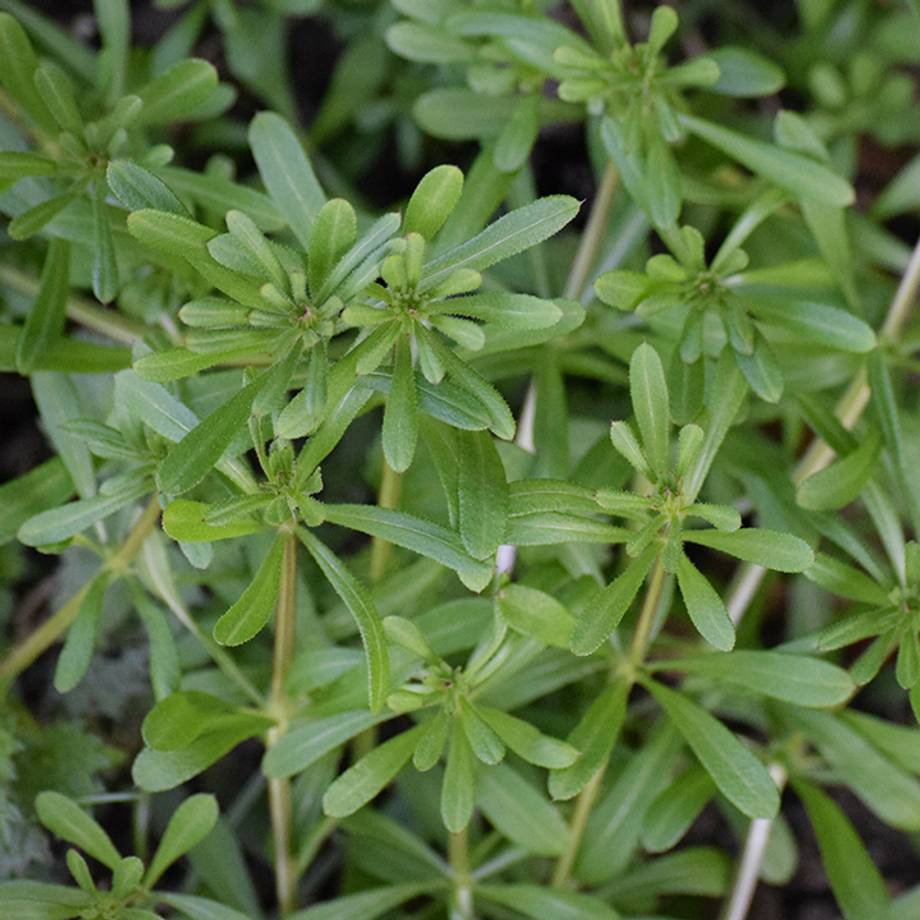
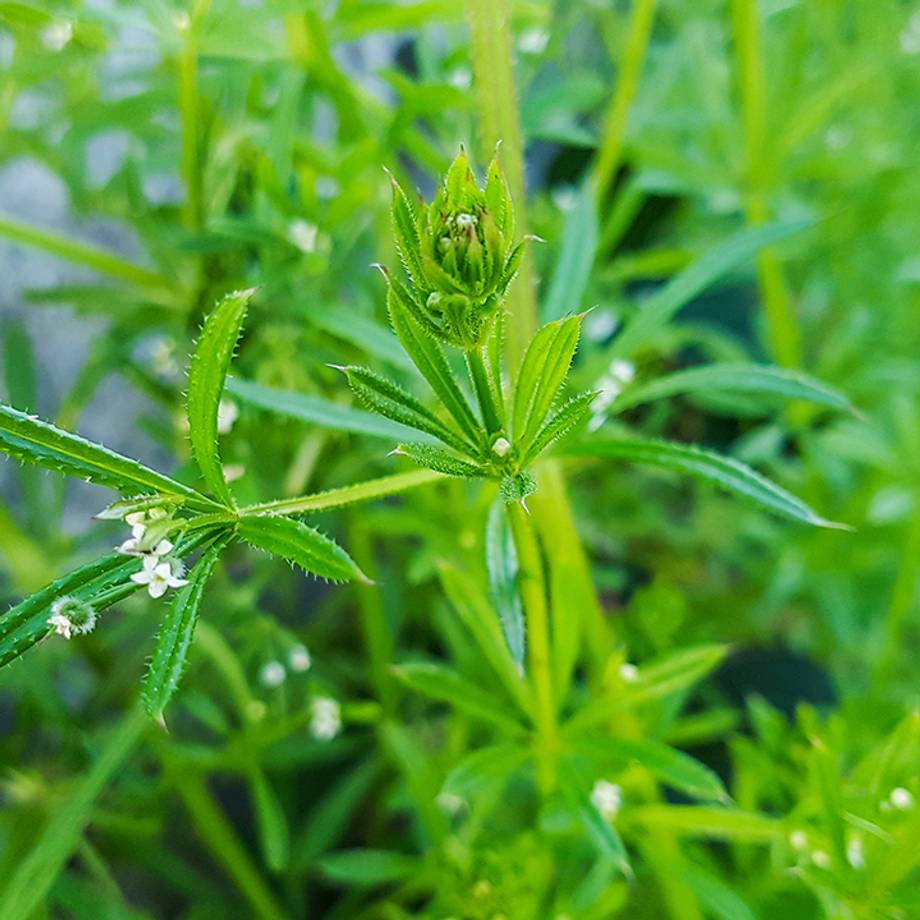
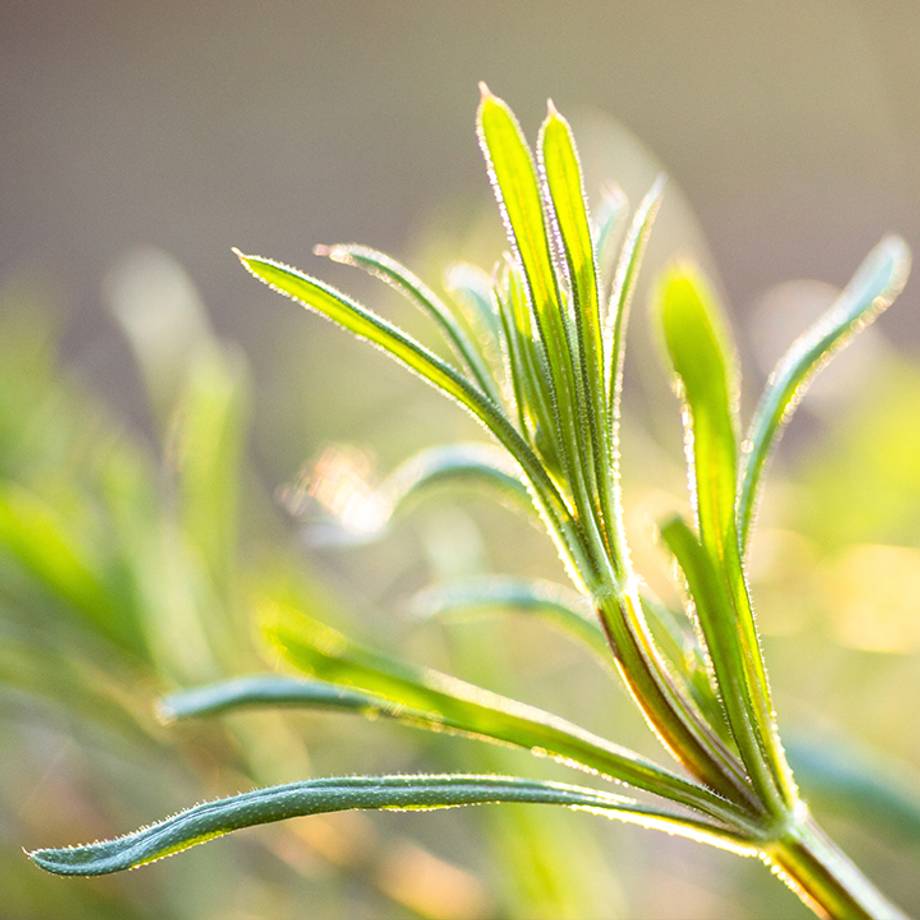
Cleavers is a tenacious annual, growing in dense mats in loamy, nitrogen-rich meadows, forests, thickets and along seashores in the temperate climates of its native Europe, Northern Africa, and Asia, as well as other places that it has naturalized such as North and South America. It also thrives in deep woodlands and at the edges with sun or dappled shade. With its square-shaped stem and sticky hairs, it manages to stick to whatever passes by, earning it memorable nicknames like “velcro plant,” “grip grass,” and “catch weed.”
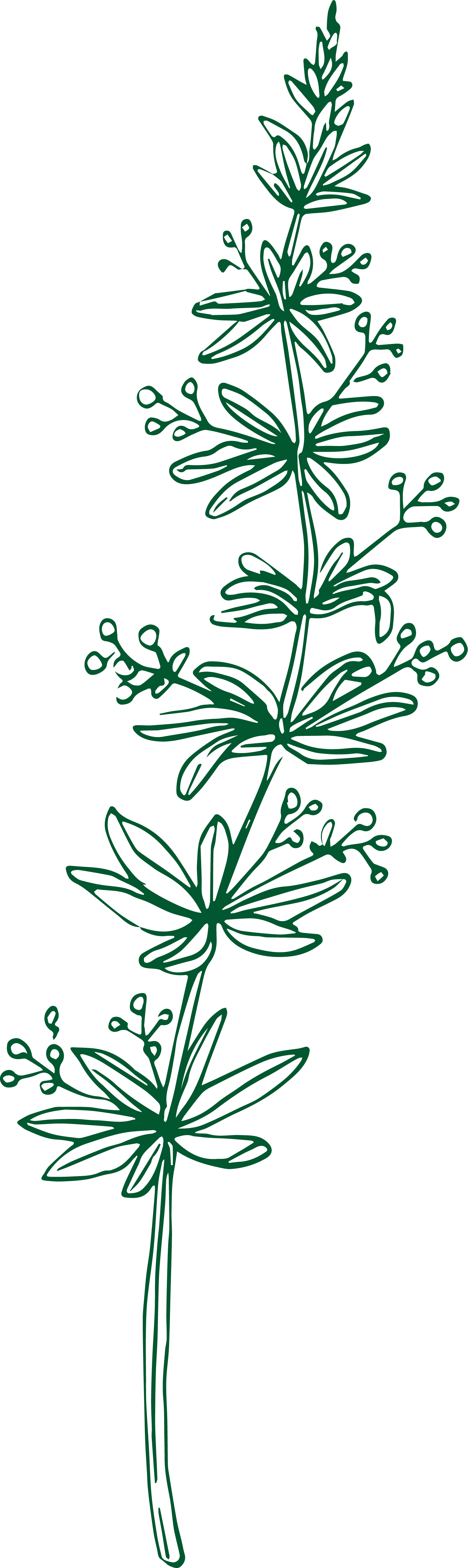
In fact, cleavers earned its name from the Old English word, “to cleave to,” which means “to latch onto.” It’s an annual green that grows to about four feet tall and is generally harvested from June to August before it blooms and sets seed. Cleavers has leaves that grow in whorls of 6-8, and it has tiny white flowers. Here in California, cleavers pop up by the multitudes in the spring. While easy to ignore as you walk by, cleavers will not let you forget it once it attaches itself to your pant leg.
Products that contain Cleavers
EveryDay Detox® Lemon Tea
Additional Information
Important Precautions
Consult a healthcare practitioner prior to use if you are pregnant or breastfeeding.
Legal Disclaimer
The information and other content in this article are designed to provide a general overview of the botany, cultural history, and traditional uses of this herb. It is not intended and should not be construed as health advice. Every person is unique and you should consult with your health care provider before using any herbal product or supplement.
Become an Herb Nerd & Get 10% Off!
Herbal tidbits, DIY plant projects, exclusive discounts, and recipes to follow the seasons delivered straight to your inbox.